Tangelic Talks – Season 05 | Episode 02
Building Communities, Not Just Buildings: Transit-Oriented Affordable Housing w/ Nick Kham
16 minutes to read
What does it actually take to turn an abandoned mill in upstate New York into a thriving mixed-use community? In Season 5, Episode 2 of Tangelic Talks, hosts Victoria Cornelio and TJ Omojomolo sit down with Nick Khamsopa, founder of Hudson Housing Lifestyle — a man who went from arriving in New York at age 11 from Thailand, to union carpenter, to high-rise superintendent at Turner Construction in Midtown Manhattan, to spearheading high-speed rail for the US Congress, to now building 5,000 units of workforce affordable housing across New York State.
Nick’s career is a masterclass in connecting dots that most people can’t even see — and his vision for what transit-oriented, community-integrated development can do for local economies is one of the most grounded, human-scale arguments for sustainable development you’ll hear anywhere.
From JFK to High-Rise: A Career Built on Curiosity and Courage
Nick’s story starts at eleven years old, stepping off a plane at JFK after being raised by his grandmother in Thailand. His parents drove him straight into New York City. He looked up at the skyline and made a promise to himself.
“At 11 years old, I looked up at these buildings from the jungle of Thailand and said, one of these days I’m gonna learn how to build something like that.”
That promise became a vocation school, then a union construction apprenticeship, then a superintendent role at Turner Construction in Midtown Manhattan. By 1996, a year and a half after graduating, he had close to a hundred union workers building up and down the East Coast under his own general contracting company. He didn’t stop there. When you’ve learned how to build, he explains, the next challenge is learning how to own. So he moved into custom home building, land acquisition, project finance, and eventually — through a winding path that included working on high-speed rail for President Obama’s administration from 2015 to 2017 — into the complex world of federally subsidised affordable workforce housing.
The throughline isn’t a sector. It’s a mindset: find the next hardest thing, learn it from the inside, and never be afraid to knock on the door and ask how it’s done.
The Housing Crisis in Numbers — and Why Workforce Housing Is Different
New York State is short one million units of housing. Nick’s county alone is short 33,000. The county next to it, 28,000. The state passed legislation in 2025 to build 800,000 units — of which roughly 160,000 to 200,000 have actually been built. The gap between ambition and action in housing policy is, as Nick puts it, enormous.
But the type of housing he’s building isn’t what most people picture when they hear “affordable housing.” This is not Section 8. This is not voucher-based low-income housing. This is workforce housing — market-rate-affordable units calibrated to the Area Median Income (AMI) of each county, targeting the teachers, nurses, police officers, and firefighters who grew up in these communities but can no longer afford to live in them.
“This is affordability for the policeman, the teacher, the fireman, the nurses and the local municipality. This is not what people think — it’s not low income. It’s affordable for workforce.”
The economics are counterintuitive but compelling. Because the state is desperate to keep working people in New York rather than losing them to Florida, Texas, or Arizona — New York lost 430 people a single day to Florida after COVID — it has created a capital stack that layers federal subsidies, state grants, and local incentives to cover 70 to 80 percent of construction costs. The developer charges AMI-calibrated rents. The math works. But only at scale.
Transit-Oriented Development: What It Actually Means
Hudson Housing Lifestyle’s model is Transit-Oriented Development (TOD) — housing built within walking distance of a train or bus stop, integrated with retail on the ground floor, embedded in the fabric of an existing village rather than sprawling out into greenfield land.
Each location is 100 to 150 units. The ground floor hosts roughly 10,000 square feet of retail — cafés, pizza, a hair salon, dry cleaning, a nail salon, food stalls. Not lifestyle amenities dropped into a development as an afterthought. Local businesses that are viable because 200 residents live directly above them, and the village around them has a reason to walk in.
“You have five eateries downstairs, a café, pizza, taco. You open it up to the village, inviting them to come in and spend money because it’s their village, it’s their community. Every dollar spent is sevenfold economic return to the local economy.”
The government’s explicit preference is for this type of in-fill development over greenfield sprawl. Sites outside existing township boundaries don’t qualify for the subsidy and grant structure that makes the numbers work. Which means Nick’s model is not just ethically aligned with sustainable development — it’s structurally required by the incentive architecture.
Community Trust: The Hardest Part Nobody Talks About
TJ asks the question Nick says nobody else has asked: how do you actually engage the community you’re building for, and how do you keep them from seeing you as a threat?
The answer is local credibility, built over decades. Nick grew up in the region. His wife spent four years certifying as a Woman-Owned Business Enterprise (WBE) through New York State and federal registration. Every contractor on his projects is union. Every laborer is local. The AFL-CIO pension fund — which Nick has cultivated relationships with over thirty-five years — buys the senior debt on completed projects, which means the teachers’ and police officers’ pension money is reinvested directly into the communities those same workers live in.
“You build community by developing and creating jobs for the community first. You can’t build community and hire a guy from Texas to come in and do the construction. That doesn’t work — especially when you have taxpayer money and pension funds involved.”
Three years ago, he says, every municipality was suing anyone who proposed affordable housing. Now the same villages are calling him. The shift happened because the projects being built aren’t bringing in outsiders — they’re keeping locals. The money spent on construction stays in the local economy. The residents who move in spend money at local restaurants and shops. The union workers buying nicer cars and spending at local grocery stores are the same workers who built the building. The economic circle closes.
The Capital Stack: How $100 Million Triggers $2.5 Billion
The financing architecture behind Nick’s model is one of the most clarifying explanations of large-scale development finance you’ll encounter outside a business school lecture — delivered in plain language by someone who learned it by doing.
The entry point is $100 million in mezzanine bridge capital. This unlocks $2.5 billion in construction across 50 locations. That construction budget is funded by the AFL-CIO Housing Investment Trust buying the mortgage — senior debt backed by a tangible cash-flowing asset, insured by a federal guarantee instrument called a Ginnie Mae paper. The pension fund isn’t investing in markets. It’s investing in insurance. It cannot lose.
“The union pension fund is purchasing backed by a tangible asset that’s cash flows. So therefore they’re never going to lose this because they don’t trust the investment bank anymore. They lost money to the federal government.”
Wall Street’s role is equity participation in the development upside — 10 to 15x returns on pre-development money as sites move from acquisition to construction-ready. The local IDA (Industrial Development Agency) and economic development bodies provide political backing and partial subsidy. The construction company brings 40 to 100 years of institutional experience required by lenders. Every piece has a defined entry point and exit. Nothing is speculative.
What makes the whole structure viable is scale. One location is not fundable at this level. Fifty locations — spread from Westchester to Albany to Rochester — creates a portfolio that institutional capital can engage with. Below $100 million, Wall Street doesn’t get out of bed.
Brownfields: Turning Industrial Ghosts Into Community Assets
The sites Nick targets are former industrial properties — mills, factories, warehouses — that sit abandoned in the hearts of New York State’s small towns. These brownfields were the engine of the industrial revolution, built where waterways provided power. They were abandoned when manufacturing left. They’ve been slowly cleaned up using federal remediation grants, and are now sitting in the middle of villages, owned by people who bought them for nothing and now want to sell at premium.
Nick’s job is to negotiate the land price down to a level where the rent roll — constrained by AMI caps — can support the debt service. If the land costs too much, the numbers don’t pencil and the project dies. This negotiation alone takes four to six months. It precedes every other dollar spent.
“The government does not want you to go outside the township and gouse the land. They want this to be a community development in the village — integrated with retail to offset the needs of the village, and residents above it. A true community.”
The brownfield’s central location is actually a feature. TOD only works when residents can walk to transit. Industrial sites in village centres, adjacent to rail or bus infrastructure, are the ideal canvas for exactly the model Nick is building.
Key Takeaways from S05E02
🏗️ Workforce housing is not low-income housing — it’s market-rate-affordable, calibrated to AMI, targeting the working people who built and serve their communities but can no longer afford to live in them.
🚉 Transit-oriented development works because it’s integrated — housing above retail, within walking distance of transit, embedded in existing village fabric. This is what sustainable community development actually looks like in practice.
🤝 Community trust is built through local ownership, not just good intentions — union labor, local contractors, WBE certification, and 35 years of relationship capital with AFL-CIO pension funds. The community believes you when the community is building it.
💰 $100 million unlocks $2.5 billion — the capital stack logic of large-scale affordable housing finance is counterintuitive but airtight when structured correctly. Scale is not optional; it’s the mechanism that makes the math work.
🏚️ Brownfields are the opportunity — New York’s abandoned industrial sites, already in the heart of existing communities, are the canvas for the next generation of workforce housing. The remediation has been done. The land is there. The question is who gets to build on it and how.
Final Thoughts
Nick Khamsopa is not a typical developer. He’s a union carpenter who learned every layer of the built environment from the ground up — literally — and spent thirty years connecting dots that most people in any single part of that system can’t see. His model for workforce housing isn’t an ideology. It’s a structure: local labor, institutional capital, government subsidy, community integration, union pension debt, all assembled into a prototypical that can repeat across fifty locations without losing what makes each one specific to its place.
The housing crisis in New York State is a microcosm of a global phenomenon. London has it. Toronto has it. Every city where working people can no longer afford to live near where they work has it. The solution Nick is building is neither radical nor particularly new — it’s what well-functioning communities used to produce when the infrastructure of capital, labor, and governance was aligned toward that end. He’s trying to realign it.
“Dream it. Manifest. Speak it out loud to the universe. And never stop pounding pavement — because it’s you against you.”
That’s his advice to the next person who steps off a plane at JFK and looks up.
Thought Provoking Q&A with Nick Khamsopa
I look at what’s been passed over – abandoned warehouses or previous brownfields that have access to water and sewer systems. Then I run a market analysis of the possibilities for that site, and evaluate it considering that and the New York mission statement
The government doesn’t want you to develop outside of the township. What we want is to create a development in the community, one that is livable, has retail on the first floor, and becomes an integrated part of community life.
A lack of awareness. As soon as you say affordable housing, communities think it’s strictly low-income housing that’s going to bring crime and lower property values in the neighborhood; that’s not what we’re building here.
The reason why we build 100 unit projects is to fit the bill of retail. To sustain the retail business on the first floor, the pizza place, the salon, whatever it is, you have to have a certain number of tenants living in the building to make that business sustainable. And retail in the building is what makes it a community development – you need that.
This is the first program like this in the State of New York. Other programs like Section 8 HUD affordable housing focus on vouchers or low income affordability. We’re creating market rate affordable housing in a non-voucher form and working to keep the AMI (Area Median Income) at the country average.
In the affordable housing sector, if you don’t structure right, you’re not going to get capital. That’s why I spend three years putting infrastructure in to make sure that my structure is prototypical.
Antavir is built by the community, right? It’s built by local union laborers, funded by a New York state grant and federal funding. So that money stays in and gives back to the local economy. Every dollar spent is a sevenfold economic return.
Nick Khamsopa
CEO/President, Hudson Housing Lifestyle, LLC
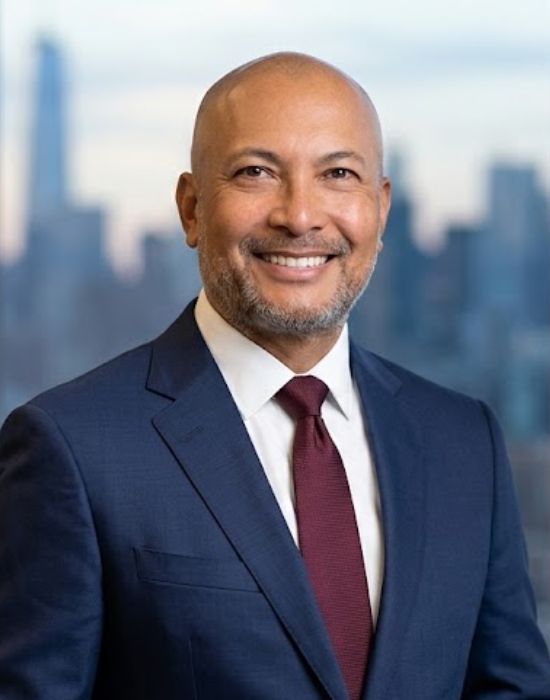
Nick Khamsopa is the CEO and President of Hudson Housing Lifestyle, a real estate development company that focuses on affordable housing and community-centered development. He leads Hudson Housing Lifestyle in developing 5,000 affordable housing units across the Hudson Valley and greater New York, supporting New York State’s goal of 800,000 affordable units statewide.
His work focuses on not just affordable housing, but using redevelopment opportunities and adaptive reuse to build in a way that invests in communities and creates a lasting impact.