Tangelic Talks – Season 03 | Episode 09
Translating Vision into Action: How Systems Thinking and Purposeful Leadership Drive Africa’s Energy Future
15 minutes to read
In this powerful episode of Tangelic Talks, co-hosts Victoria Cornelio and Andres Tamez sit down with Theo Minné (COO Tangelic), a telecom and infrastructure veteran with over three decades of experience building systems across Africa — from mobile networks in the 1990s to today’s sustainable energy revolution. Theo shares his journey from working in the deserts of Namibia to leading transformative energy and telecom projects across the continent. With a career rooted in systems thinking, anchor client models, and inclusive leadership, Theo discusses what it really takes to translate vision into practical, scalable action — especially in Africa’s most challenging environments.
From Telecom Towers to Energy Systems: A Career Built on Grit and Adaptation
Theo’s career began in the early 1990s, when South Africa was entering a new era of connectivity. Trained as an electronics apprentice at Alcatel Altech, he found himself on the front lines of one of the most transformative industries in history — mobile telecommunications.
When cell networks were still a novelty, Theo was helping to build them — literally.
“In the early days,” he recalls, “there was no mobile network. If you had a problem on-site, you couldn’t just call your boss. You had to drive for hours to the nearest town to make a phone call.”
Those early projects taught him resilience, risk management, and the importance of simplicity in execution. As he helped expand telecom infrastructure across Africa, from South Africa to Namibia, the DRC, and Rwanda, Theo learned to adapt to local conditions — scarcity of materials, unpredictable logistics, and the constant test of innovation.
“Even getting cement or clean water to build was a challenge,” he says. “But you learn fast. You learn to simplify the complex.”
Lessons from the Field: Simplicity Is the Ultimate Sophistication
Theo’s approach to leadership is grounded in systems thinking — understanding how every part of a complex process interacts and how simplicity can unlock efficiency.
He shares a defining lesson from his early days at ABB, a global engineering company:
“I built a process automation model that I thought was brilliant — technically perfect. But Zurich headquarters told me, ‘It’s too complex. It’ll take forever to implement.’ That was a turning point for me.”
For Theo, complexity isn’t a sign of intelligence — it’s often a barrier to progress. The real art of leadership lies in breaking down grand visions into practical, scalable steps that people can actually execute.
“Whatever the complexity,” he says, “you have to make it simple for the people who will implement it. That’s where real change happens.”
The Power of Systems Thinking in Scaling Infrastructure
At the heart of Theo’s philosophy is systems thinking — the practice of viewing problems as interconnected rather than isolated. Whether building a telecom tower or deploying renewable microgrids, every component — logistics, community engagement, cost structure, and local capacity — must work in harmony.
He explains:
“Scaling isn’t just about size; it’s about balance. You can’t expand one part of a system without adjusting the others. Logistics, cost, and people — they all have to align.”
In Africa, this systems-based approach is essential. Logistics can be unpredictable, roads can vanish overnight, and access to remote regions may depend on weather, trust, or even a single bridge.
“When we built sites in the DRC, sometimes we had to fly equipment in Antonov planes, unload them into boats, then mopeds, just to reach one village,” Theo recalls. “Scaling requires both creativity and humility.”
Conscious Capital and the Rise of Impact Finance
Beyond engineering, Theo has also become a strong advocate for conscious finance — a new wave of investment that values impact as much as returns.
“Africa is going through a fascinating phase,” he explains. “We’re seeing private equity and family offices move away from pure ROI toward impact and conscious capital.”
In the past, billions have been invested in Africa’s infrastructure — ports, highways, energy grids — but not all of it has improved the lives of rural communities. Theo believes that’s because much of the funding stayed too far removed from the people it was meant to serve.
Conscious capital, he says, must bridge that gap — funding models that empower communities, unlock suppressed demand, and create circular growth where money flows back into local economies.
“It’s not just about financial return,” Theo emphasizes. “It’s about lasting impact — the kind that gives rural families access to power, opportunity, and dignity.”
From Telecom to Energy: Transferring Lessons Across Industries
Theo’s decades in telecom taught him invaluable lessons that now guide his work in the renewable energy sector.
Both industries share striking similarities — complex logistics, remote sites, high risk, and the need for reliable systems. The only difference is that now, instead of building towers for communication, he’s helping design systems that bring clean power to off-grid communities.
“Telecom required civil works, structural design, electrical installation, logistics — everything. Solar and clean energy systems are built the same way,” he explains. “The skill sets are highly transferable.”
This cross-sectoral knowledge is critical for Africa’s clean energy transition. It enables faster implementation, more efficient systems, and — most importantly — a people-centered approach rooted in local realities.
Anchor Clients and Distributed Value Chains
A core concept Theo champions is the anchor client strategy — a model that helps stabilize early-stage projects by aligning them with reliable long-term partners.
In telecommunications, anchor clients were often large mobile operators who ensured consistent demand. In energy, anchor clients can take new forms — private businesses, institutions, or clusters of communities that ensure consistent usage and local ownership.
“Anchor clients create trust and continuity,” Theo explains. “They help de-risk expansion into new regions by providing a stable base. It’s like building a strong foundation before the walls go up.”
He also stresses the importance of distributed value chains — systems that decentralize production and empower communities to participate at every level, from manufacturing components to maintaining installations.
This model not only increases resilience but also ensures that economic benefits stay within communities rather than flowing out.
Scaling in Africa: The Challenge of Distance and Context
Scaling infrastructure in Africa is not just a technical challenge — it’s a logistical and cultural one.
“You can’t copy-paste solutions from urban centers into rural areas,” Theo warns. “What works in Accra may fail in the north because the context is completely different.”
Distance, weather, and access remain major barriers. Rural sites can cost up to 30% more to build than urban ones simply due to logistics. But Theo sees this as an opportunity for innovation, not defeat.
“We have to design systems that fit the context — modular, affordable, and resilient,” he says. “If we don’t adapt, we can’t scale.”
He emphasizes that real progress requires patient capital — investors willing to accept longer timelines and more flexible returns in exchange for long-term impact.
Leadership, Mentorship, and the Human Factor
With decades of leadership experience across ABB, Ericsson, and now Tangelic, Theo has one golden rule:
“People build projects. Technology supports them.”
He believes that strong teams, mutual respect, and open communication are what sustain complex systems. Transparency and mentorship are vital for keeping teams aligned with the vision.
“You have to align everyone behind a clear, simple vision,” Theo says. “Don’t overload it. Then you take it one step at a time — test, learn, improve, repeat.”
He compares scaling to the proverb of eating an elephant:
“You eat it one piece at a time. That’s how we built networks across Africa — site by site, lesson by lesson.”
Integrity in Impact: Choosing the Right Partners
Theo is equally passionate about ethics in development work. While grants, CSR funds, and donor investments are valuable, not all money is equal.
“Some CSR budgets exist just to polish a company’s image,” he says. “We must do our homework. If a partner’s integrity is questionable, we walk away. Communities deserve better.”
He stresses that Tangelic’s ethos is built on integrity and transparency — ensuring that every partnership aligns with community needs, not just donor priorities.
“Integrity is our compass,” he adds. “We’d rather move slower with purpose than fast without principles.”
Pragmatism and Persistence: The Twin Engines of Leadership
When asked what keeps him going after decades in the field, Theo’s answer is simple: grit.
“We’ve had projects where we could only work under UN protection,” he recalls. “If we had given up, nothing would’ve been built.”
His advice for aspiring changemakers?
- Find a mentor.
- Be honest — with yourself and your team.
- Stay pragmatic.
- And most of all, never lose sight of the vision.
“Vision without action is just a dream,” he says. “Action without vision is chaos. You need both.”
Looking Ahead: Building Trust, Access, and Opportunity
As Tangelic continues its mission to expand clean energy access across rural Africa, Theo sees enormous opportunity on the horizon.
“The biggest opportunity is impact,” he says. “Seeing people’s lives change — women spending less time collecting firewood, children studying after dark, clinics keeping medicine cold — that’s the real reward.”
For Theo, technology is not just about innovation; it’s about dignity and empowerment. Each solar panel installed, each microgrid launched, represents a step toward a more equitable world.

Thought Provoking Q&A Session with Theo Minné
An anchor client is such an important part of development across Africa — I’ve seen this especially in telecoms, one of the sectors I’ve worked in. We used to work closely with an anchor client who might move from one country to the next, and we would follow. That relationship builds trust and allows you to scale infrastructure efficiently across regions.
These anchor clients — or “key accounts,” as we used to call them — form the foundation for scaling. We’d build an entire management structure around them, including technical, commercial, execution, and support teams. When you provide real value to that anchor client, they’ll stay with you for as long as possible. That’s key.
I’m a big proponent of anchor clients because they reduce the cost of expansion and give you a degree of certainty that enables further investment and scaling.
Now, when we translate that concept into energy systems, anchor clients take on a slightly different form. Governments play a partial role, but they’re not always the main anchor clients, especially considering that around 600 million people in Africa still lack access to electricity. This means there’s a major gap in generation, transmission, and distribution infrastructure.
In the energy sector, private companies often scale resilient solutions by leveraging anchor clients — sometimes in combination with local communities as end users. The balance between these two can be powerful, though when projects go fully off-grid, finding that anchor client becomes more challenging.
Absolutely — there are definitely transferable skills and systems between industries. We’re often dealing with very similar challenges.
In telecoms, for instance, we handled structural work, electrical work, and the installation of specialized equipment. All of that relied heavily on logistics to get materials to site efficiently. The same applies to resilient energy systems — you still need civil works, structures, installation, and proper logistics.
Interestingly, in South Africa, we’ve seen many telecom service companies transition into the solar space as renewable energy took off. The skill sets and operational requirements are so similar that the move made perfect sense.
Definitely — there are real risks involved. One of the biggest is political risk.
In many African countries, a change in political leadership can quickly shift policies, since robust democratic systems that act as safeguards aren’t always in place. For example, when I was at ABB and we were working on a project in Mozambique, we couldn’t get our equipment across the border from South Africa because a new political leader decided to block South African companies.
Economic risk is another key issue. In places like Nigeria, for instance, when oil prices drop, it affects the flow of foreign exchange. Investors sometimes find their money stuck in-country and can’t repatriate funds. That’s a serious concern for anyone putting large sums into infrastructure or energy projects.
That said, many investors are now becoming more experienced and strategic when working in Africa. They’ve developed frameworks and KPIs that account for these challenges, which is helping the overall system mature.
Even in the charity and development space, you sometimes see an expectation of return on investment (ROI), which can create interesting tensions in what’s supposed to be a not-for-profit context.
That’s a really interesting question. What we’re seeing now is that some institutions still expect a return on investment (ROI) — but they’re redefining what that means. It’s not just about financial returns anymore. They also want to see a social or economic return, a broader measure of impact.
For example, some formal institutions now assess metrics like achieving a social return of ten times what they’ve invested, or generating local economic benefits that far exceed the initial capital. So, ROI has become a much more complex and multidimensional concept.
We’re also seeing that investors can still achieve a standard financial ROI when they combine their investments with grants or other innovative finance mechanisms. That way, everyone benefits — both financially and socially — from the project.
Yeah, I mean, in most cases, there will be some strings attached when you receive funding from a CSR budget — especially if it’s from a publicly traded company. They need to report on how those funds are used, so there’s usually a level of compliance and accountability expected from your side.
It’s not necessarily a bad thing, but there will be expectations and deliverables that come with it. For example, I’ve worked with grant and feasibility funding from Germany, and there were very clear requirements. We had to assess technology, build a feasibility case for that technology in South Africa, and submit detailed reports and modeling — all part of a structured funding agreement.
With CSR funding, some companies still use it partly for image management — that’s been the case for years and probably won’t change overnight. But the key takeaway is: whether it’s grants or CSR funding, you have to know who you’re dealing with. Do your due diligence. If something feels off or “shady,” it’s better to walk away.
If we bring it back to Tangelic, we might say this is our ethos — this is what we’re really about. For us, it’s important that we don’t bring any questionability or lack of integrity to a community project. Integrity is crucial.
There will always be enough funding available for communities; you don’t have to take the first offer that comes along, especially if the intentions behind it are unclear.
A good example is mining companies in Africa. They often have very large CSR budgets, but there are legitimate concerns around exploitation and ethics. If a mining company approached us, we would need to thoroughly understand their track record and what they’ve done. That’s a prime example of the kind of due diligence that’s necessary.
I’m not sure if people always understand, but there’s a lot of infrastructure in the main centers, the major cities, while outside of these areas there’s often a significant lack of infrastructure. One thing that can really change that is strong leadership.
A good example is Rwanda. When I first visited, it was just a few years after the genocide — buildings were destroyed, roads were in ruins, and the water was unsafe due to contamination. By 2017, the infrastructure had transformed remarkably. It was unbelievable — the country had rebuilt in ways that were almost invisible unless you were there to see it.
The key takeaway is that the best way to understand infrastructure is to have boots on the ground — to see what exists, what can be leveraged, and what needs improvement. Many countries in Africa are working on infrastructure development, including partnerships with China, but firsthand observation is invaluable.
Local partners who understand the communities, their culture, and customs are incredibly important. You can’t go in assuming you know how things work. Even something as simple as the proper way to greet a community leader can make or break a project. If you get these subtleties wrong, it can create resistance and make it almost impossible for the community to use what you implement.
This is something Tangelic has done exceptionally well by partnering with Green4Change Ghana, an organization with deep experience working with local communities. They understand all the nuances and intricacies that outsiders might miss. When building a rollout plan for energy in the area, these community requirements are factored in to ensure smooth implementation and adoption.
Part of the challenge is avoiding a sense of hubris—thinking you know exactly how to interact with communities without guidance. It’s far better to defer to the people on the ground who have been there and earn their cooperation. That approach reflects well on the project and builds trust.
Successful community initiatives are partnerships. The solar panels, cookstoves, and other interventions aren’t meant to last a week—they need to be impactful for the long term. Strong partnerships ensure that if something goes wrong, the community reaches out instead of reacting negatively, and the project team is ready to provide support.
A key part of this is training the community to replicate the solutions themselves. They don’t need external experts to return every few years. By integrating these tools into everyday skills, the community becomes self-sufficient, ensuring sustainability and long-term impact.
I think the main opportunity that really excites me is seeing the change it brings to people’s lives.
This is something very close to my heart because I’ve witnessed it so many times in so many places. The basic things we take for granted, they simply don’t have. For example, some have to use equipment containers with air conditioning just to keep their medicine cool—things most of us wouldn’t even think about, yet they deal with it daily.
I’m excited to see the impact of our work: how women, in particular, won’t have to expend so much effort on the basics just to survive. If we can provide them with better tools that uplift their lives, that’s what I’m really looking forward to.
Theo Minné
Accomplished Business Builder and Chief Operating Officer Tangelic
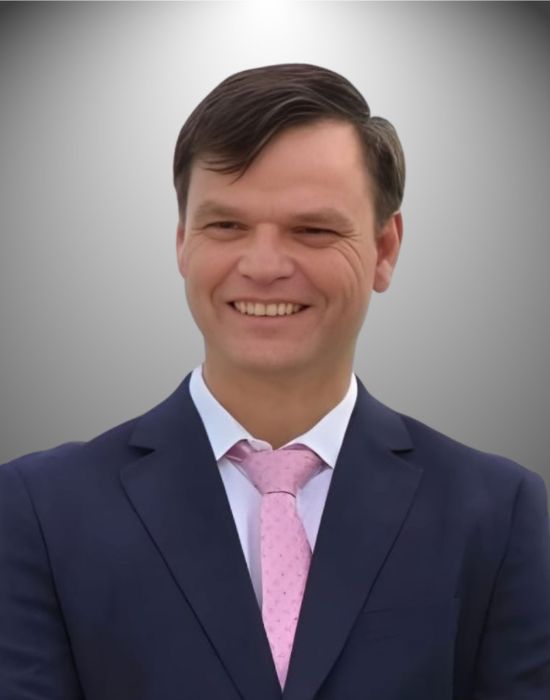
Theo Minné is an accomplished Business Builder and Chief Operating Officer Tangelic. He’s a dynamic and results-driven senior management and international business development professional with over 30 years of experience leading high-impact telecom and renewable energy initiatives across Africa.
Proven business development leader with a track record at global giants like ABB and Ericsson AB, securing strategic partnerships and driving market expansion. Certified in project management, risk management and finance, transforming complex challenges into actionable outcomes, particularly in emerging markets. Passionate about advancing the renewable energy industry and contributing to global clean energy goals, with a unique focus on African renewable markets combined with innovation based on artificial intelligence.
