Tangelic Talks – Season 03 | Episode 13
Empowering Africa’s Youth: Clean Energy Activism, Youth Networks, and Policy Advocacy across Ghana w/Chibeze Ezekiel
15 minutes to read
In this episode of Tangelic Talks, we sit down with Chibeze Ezekiel, the Ghanaian climate activist celebrated as “the man who stopped the coal plant in Ghana.” Chibeze shares the inside story of how a grassroots campaign successfully pushed back against a proposed coal power plant — and in doing so, shifted Ghana’s energy future toward cleaner, more sustainable alternatives.
We explore the strategies behind this landmark victory and the vital role that local communities, youth mobilization, and persistent advocacy played in building national momentum. Chibeze reflects on how to balance grassroots passion with engagement at the policy and institutional level, ensuring that the voices of everyday people shape national energy transitions.
From Business Aspirations to Climate Transformation
Before he became a global advocate, Chibeze was preparing to take over his father’s business. But life had other plans. In 2009, he was selected for the World Bank and British Council’s Youth Master Trainers on Climate Change program—a transformative experience that introduced him to the science and urgency of climate change.
“I was trained in climate concepts and given a small grant to share that knowledge,” he recalls. “That was the first time I saw how deeply communities were being affected by floods, droughts, and deforestation. That experience changed my life completely.”
The shift wasn’t easy. He had to convince his family that environmental advocacy was a meaningful career path. But the more he saw the impact of climate change on vulnerable communities, the stronger his conviction became.
“Securing our future is the motivation,” he says. “Every day, I see the enthusiasm of young people ready to build solutions. That gives me energy.”
Building Youth Power for Climate Action
Chibeze’s career is defined by one central idea: young people are not just victims of the climate crisis—they are the solution. Through SYND, he’s mobilized youth across Ghana and Africa to take up space in decision-making processes often dominated by older policymakers.
But creating that space hasn’t been easy. “When I started, young people were seen as too emotional or inexperienced,” he explains. “We were known for protests, not policy.”
To shift that narrative, he focused on capacity-building—training young activists to understand policy language and advocacy strategy. “I learned to write position papers and policy briefs, to speak the language of decision-makers,” he says. “If we want to influence change, we have to come prepared.”
He also emphasizes constructive advocacy over confrontation. “You can’t just say no,” he notes. “If you reject a government policy, you must propose an alternative. That’s how you earn credibility.”
This philosophy has helped SYND become a trusted partner in Ghana’s climate policy ecosystem and a model for youth engagement across Africa.
The Man Who Stopped the Coal Plant in Ghana
In 2015, Ghana announced plans to build a coal-fired power plant in partnership with China—a move that sparked concern among environmentalists. Chibeze and a group of young activists decided to act.
“We didn’t rush to protest,” he says. “We started quietly—visiting communities where the plant would be built, talking to people, gathering facts. I call it the submarine approach—you move quietly underwater until it’s time to surface.”
Through research and community dialogue, his team discovered that locals hadn’t been properly consulted and didn’t understand the potential environmental risks. Armed with data, they engaged other NGOs and launched a coordinated campaign.
The government justified the coal project by claiming it would be cheaper and create jobs. But Chibeze and his team countered that narrative with evidence.
“Coal only seems cheap when you ignore the health costs, the pollution, and the long-term damage to water and soil,” he explains.
“And if it’s about jobs, renewable energy creates far more opportunities—installation, maintenance, innovation—than coal ever could.”
Their evidence-based advocacy worked. In 2016, Ghana officially canceled the coal power project, opting instead to pursue renewable and cleaner energy pathways.
Today, Ghana stands as one of the few countries in Africa that averted coal dependence—a milestone that earned Chibeze international recognition, including the Goldman Environmental Prize.
Centering Communities in Climate Solutions
A recurring theme in Chibeze’s work is community inclusion. He believes that real climate justice starts with those most affected.
“Too often, NGOs speak for local people instead of with them,” he explains. “Communities must be part of the solution because they understand their environment better than anyone else.”
His team engages directly with affected groups—farmers, women, and youth—to co-create strategies and amplify indigenous knowledge. “These communities have preserved nature for centuries,” he says. “Modern systems should learn from them, not replace them.”
He also advocates for inclusive policy committees where community representatives sit alongside government officials. This approach, he says, builds trust and ensures policies reflect real needs.
From Activism to Green Entrepreneurship
Chibeze believes the future of climate activism in Africa lies in entrepreneurship. Through SYND’s Young Green Entrepreneurs Program, he helps youth transform environmental challenges into business opportunities.
“We realized that young people can’t live on advocacy alone,” he says. “We need to turn solutions into enterprises that create jobs and drive sustainability.”
One success story is organic waste briquettes, an innovation developed by young Ghanaians who transform agricultural waste into clean cooking fuel.
“These briquettes reduce deforestation, cut indoor air pollution, and create jobs,” he explains. “It’s a single solution with multiple benefits.”
The program now trains and mentors youth-led green startups across Ghana, preparing them for investment through capacity-building and business development training. “Our goal,” he says, “is to make young people investors in sustainability, not just advocates.”
Ghana’s Energy Transition: Challenges and Choices
When asked about Ghana’s current energy transition, Chibeze’s optimism is cautious but clear.
Ghana’s Energy Transition Framework (2022–2070) and Investment Plan (2022–2060) outline a roadmap toward net-zero emissions. But political changes have created inconsistencies.
“There’s effort, but there’s also confusion,” he admits. “We need continuity and coordination between governments.”
He acknowledges Ghana’s gradual move from crude oil to natural gas, and the growing investments in solar energy. “Gas is not perfect,” he says, “but it’s cleaner than crude. It’s part of our transition.”
However, he firmly opposes plans for a nuclear power plant, citing safety concerns and lack of waste management infrastructure. “If we can’t manage plastic waste properly, how can we manage nuclear waste?” he asks.
His stance reinforces a broader point: that a just transition isn’t only about technology—it’s about safety, inclusivity, and accountability.
Climate Finance, Carbon Markets, and Justice
When it comes to global climate finance, Chibeze is skeptical. Despite decades of promises from wealthier nations, the funds rarely reach those who need them most.
“Most of these mechanisms—the Green Climate Fund, Adaptation Fund, Loss and Damage—don’t work for us,” he says. “They’re full of bureaucracy. Countries like Ghana hardly see the money.”
Instead, he points to carbon credit markets as a more practical model. “Ghana has signed agreements with Sweden, South Korea, and Switzerland,” he notes. “We’re already seeing results. It’s more direct and transparent.”
Still, he stresses the need for accountability and transparency in how climate funds are used. “If climate money is misused, people must be held accountable,” he says. “That’s the only way trust can grow.”
Climate Justice and Accountability
Chibeze is also watching the rise of climate litigation and ecocide laws with interest. The recent International Court of Justice (ICJ) ruling allowing countries to sue for climate damage, he believes, could be a turning point.
“We need to test the law,” he says. “Polluting the environment should be treated like genocide—it’s ecocide.”
He supports campaigns to make environmental destruction a punishable offense, ensuring nations and corporations are legally bound to protect the planet. “It’s time to move from talk to accountability,” he says.
Reframing Climate Action: From Crisis to Opportunity
Despite the scale of the climate challenge, Chibeze radiates hope. His approach is refreshingly pragmatic: connect climate action to personal benefit.
“If you don’t believe in climate change, that’s okay,” he laughs. “But if I can show you that biking saves fuel and keeps you healthy, or that sunlight cuts your energy bills—you’re still helping the planet.”
For him, climate action is not about guilt—it’s about smarter living. “When people see that sustainability improves their quality of life, they’ll embrace it naturally.”
The Power of Youth and Persistence
From halting coal expansion to nurturing green entrepreneurs, Chibeze Ezekiel exemplifies what modern climate leadership looks like—collaborative, strategic, and rooted in justice.
His story is a reminder that climate solutions don’t just come from policies or technology—they come from people who refuse to give up.
“Young people are not the problem,” he says. “We are the solution. We are ready to build the future we want.”

Thought Provoking Q&A Session with Chibeze Ezekiel
Well, I mean, the government of Ghana had already signed the Paris Climate Agreement at COP, so our argument was — why would you go and sign a global commitment to climate action, and then come back home and announce plans to build a coal plant? That’s completely inconsistent with your position on climate action.
There were also other reasons we believed the coal plant was not ideal for us as a country. As young people, our main concern was job creation — and we felt that clean or renewable energy offered far more opportunities for youth employment compared to coal. So for us, that was a major turning point — and, fortunately, the government listened and decided to stop the coal plant project.
I would say renewable energy is absolutely viable — of course, there are cost implications and other challenges.
But the good thing is that today, Ghana doesn’t have a coal plant, and yet we’re not experiencing a power crisis. If we had gone ahead with the coal project, we would now be facing serious environmental and health problems — from waste management to air pollution. Instead, we’ve managed to maintain energy stability without coal.
Currently, Ghana relies heavily on thermal plants powered by gas. Initially, we used crude oil, which caused higher emissions and pollution. But after discovering oil in commercial quantities, we began using the byproduct — natural gas — to power our thermal plants. Gas still emits carbon, but far less than crude oil or heavy fuel oil.
So, as a country, we’ve transitioned from crude oil to gas, and over time, we’re moving toward solar and other clean energy sources. That’s why there’s been such debate — especially when Europe classified natural gas as a “green” fuel. Some agree, some don’t, but for us, it represents a step in the right direction: a better alternative to coal and a pathway toward a cleaner future.
If not for the political twists, we would have had a fantastic plan. During the 2016 era, the government in power developed what’s called the Ghana Energy Transition Framework, which covers the period from 2022 to 2070, aiming for the country to reach net zero emissions by 2070.
Then, when a new government came into office, they introduced another document — the Ghana Energy Transition and Investment Plan — which focused on how much money would be needed for the transition process. This new plan also shortened the timeline from 2070 to 2060.
Now, we have two overlapping documents: the Framework and the Plan. The question has become: Which one should Ghana actually follow? Recently, the government seems to have returned to the original Framework, setting aside the Investment Plan, and is now developing a five-year implementation strategy for the transition.
Despite the policy confusion, there has been a conscious effort to promote clean energy and invest more in renewables. We still rely on gas for now, but over time, the goal is to scale up clean energy investments.
The main point of contention, however, is the introduction of nuclear power. The Ministry of Energy and Green Transition is considering building a nuclear plant, but civil society organizations (CSOs) like ours are challenging this proposal. We know the risks associated with nuclear energy — especially around waste management and radiation — and while the government claims these new technologies are safer, we believe it’s important to review and scrutinize those claims carefully.
For now, we’re not convinced that there’s any technology capable of safely managing radiation or waste from a nuclear plant. Until we’re convinced otherwise, we won’t support the idea of nuclear energy in Ghana.
Even if it’s considered a “better” or “cleaner” option, it’s not worth the risk when the infrastructure and expertise to manage those risks simply aren’t in place. We live in a country where it’s already difficult to handle basic waste — like plastics or household refuse — so how could we possibly manage radioactive waste from a nuclear plant? For us, it’s clear that Ghana is not ready for that step at this time.
Well, I’m tempted to say something that might surprise you — perhaps I’m the only climate activist who has never attended a COP session.
My position on climate financing mechanisms is that the terms and conditions don’t favor the countries most affected by climate change. Whether it’s the Global Environment Facility, the Adaptation Fund, or now the Green Climate Fund and Loss and Damage Fund — very little of that money actually reaches developing countries. Even Ghana rarely receives funding through these mechanisms to address climate impacts.
So what’s the point? These systems seem designed to frustrate developing economies. If countries can’t access the funds, the mechanism fails its purpose.
That’s why I think the carbon market mechanism is gaining traction — it offers a more direct and visible benefit. Ghana, for instance, has signed bilateral carbon credit agreements with Sweden, South Korea, and Switzerland, and we’re already receiving funding from those deals.
It shows that countries are losing interest in traditional climate finance systems that don’t work for them. As for the Loss and Damage Fund, I’m not convinced it will bring the real change or tangible benefits it promises.
As the saying goes, there are always skeptics — people who don’t believe in climate change. They say the world has a natural way of healing itself and that, over time, everything will balance out, so there’s no need to worry.
I remember being asked about this once — even the former U.S. President, Donald Trump, didn’t believe in climate change. And I said, that’s fine. It’s their right not to believe.
But what I try to do is approach the conversation from a perspective that people can relate to — one that shows them how climate action can benefit their daily lives rather than make things more complicated.
For example, when building a house, you can design it to face the direction of the sun, so you get more natural light and save energy. Or you can consider the direction of the wind to improve ventilation, saving money on air conditioning.
Even small actions, like biking short distances instead of driving, can serve dual purposes — it’s climate action for me, but it’s exercise and health for you.
So I focus on helping people see the personal benefits — saving money, improving health, and increasing comfort — and through that, they end up engaging in climate action, even if they don’t call it that.
If someone doesn’t believe in climate change, that’s fine. But I’ll still share ideas that help them live better and more sustainably. Eventually, that’s how they come to appreciate the climate conversation — through experience rather than persuasion.
Chibeze Ezekiel
Executive Coordinator of the Strategic Youth Network for Development (SYND)
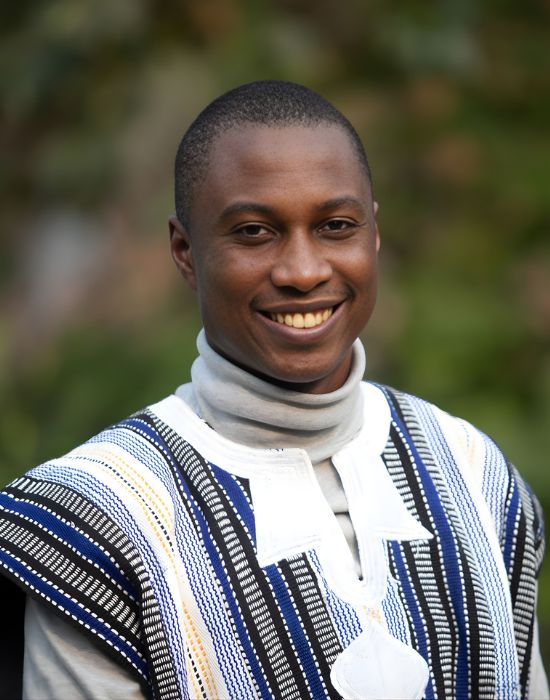
Chibeze Ezekiel is the Executive Coordinator of the Strategic Youth Network for Development (SYND), a youth-oriented NGO that promotes youth inclusion in the governance of the Natural Resources & Environmental (NRE) sector. He’s a member of the board of 350.org, a BreatheLife voice champion and the 2020 Goldman Environmental Prize Recipient for Africa.
He also chairs the Youth in Natural Resources and Environmental Governance (Youth-NREG) Platform. As a strong climate activist, he holds the conviction that young people must be at the heart of climate solutions and the projection of the ecosystem in that young people have a pivotal role to play in ensuring sustainable development. His work revolves around climate justice, biodiversity conservation and tackling poverty (economic & social justice) among young people.
As a climate strategist and clean energy exponent, he offers invaluable support to Ghana’s climate agenda such as the Nationally Determined Contributions (NDCs) and Just Energy Transition. He also supports the work of CSOs on effective ways of engaging Multilateral Development Banks (MDBs) such as the World Bank & African Development Bank (AfDB).
