Tangelic Talks – Season 04 | Episode 09
Who's Really Blocking Climate Action? Fossil Fuel Lobbying, COP, and the Fight for the Future w/ Patrick Galey
16 minutes to read
The climate crisis has a technology problem. It also has a money problem. But above all, it has a power problem. In Season 4, Episode 9 of Tangelic Talks, hosts Victoria Cornelio and Andres Tamez sit down with Patrick Galey, Head of Fossil Fuel Investigations at Global Witness — one of the world’s leading accountability organizations exposing how the fossil fuel industry shapes policy, manipulates climate negotiations, and protects its commercial interests, often in plain sight.
With a decade of on-the-ground journalism across the Middle East, years covering the climate beat for international newswires, and now leading data-driven investigations into the world’s most powerful industry, Patrick brings a rare combination of investigative rigour and righteous fury to one of the most important conversations of our time.
From Beirut to the Climate Beat: How Patrick Got Here
Patrick’s path to fossil fuel investigations wasn’t linear. He graduated during the 2008 financial crisis, had a place on Bloomberg’s graduate journalism scheme — and then an email arrived asking if he wanted a reporting job in Beirut.
“Who says no to that?”
He spent the next nine years in the region as a general reporter, then switched to climate change, mentored by a veteran climate journalist he describes as a legend — someone still genuinely shocked, after 30 years on the beat, by things audiences have long since shrugged off.
The turning point came around 2018, when the IPCC’s SR1.5 report was published — quantifying precisely how catastrophic overshooting 1.5°C would be. Then COVID arrived. And with it, the one year in decades when global emissions actually fell — by exactly the same amount they’d need to fall every year by 2030 to stay on track.
“We had a once-in-a-generation chance to clean up our economies. And the fossil fuel industry co-opted all the reconstruction grants, the stimulus, the wealth transfer.”
That was the moment something broke. Patrick realised journalism alone — telling people the truth about where we’re headed — wasn’t enough. He wanted to understand and expose the mechanisms: who is telling governments to slow down, and how are they getting away with it?
The Most Successful Industry in Human History — and the Most Devious
Patrick is unsparing in his framing of the fossil fuel industry. He describes it as the richest singular industry in human history — and therefore the most skilled at protecting its position.
The strategy has evolved in phases. First, outright denial — funding science disputing climate change. Then, once the science became unimpeachable, a pivot to false solutions, greenwashing, astroturfing, and political lobbying. Today, the industry mobilises its immense wealth not through outright lies but through soft power: getting in the ears of policymakers, defining what counts as politically possible, and setting the pace of transition on their own terms.
“You continue to allow the arsonists into the building. You continue to invite the mosquitoes to the malaria prevention conference.”
His clearest example is BP. Under former CEO Bernard Looney — who made a genuine attempt to diversify into low carbon energy — the company’s underperformance became misread as proof that going green kills returns. Despite BP’s problems being rooted in Deepwater Horizon debt, leadership scandals, and structural inefficiencies, a narrative solidified across institutional investors: renewables are the risk. BP’s activist shareholder Elliott Management, which Patrick describes with characteristic bluntness as “completely anti-climate,” pushed the company back toward full oil and gas expansion.
The punchline? Shell’s CEO recently said out loud that he would rather sell energy at $80 per kilowatt than renewables at $10. What he didn’t say — but Patrick makes plain — is that oil and gas only commands that premium because the entire global system is rigged in its favour, subsidised to the tune of $7 trillion per year worldwide.
Why COP Isn’t Working — and What Might
The frustration with the annual UN climate negotiations is something Victoria and Andres have voiced repeatedly across this season. Patrick’s diagnosis is precise.
COP’s core problem isn’t the forum itself. It’s who gets to walk the corridors. Year after year, fossil fuel lobbyists attend in record numbers — shaping the language of agreements, softening the ambitions of delegations, and ensuring that the pace of transition remains aligned with industry timelines rather than Earth’s.
“We’re 10 years on from the Paris Agreement and emissions are still rising. My answer is because you continue to let the fossil fuel people wander the corridors of power.”
That said, Patrick is careful not to dismiss COP entirely. It remains the only genuinely multilateral forum where Global Majority countries are — in theory — treated as equals, and where mechanisms like Loss and Damage finance and adaptation funding can be formally negotiated. The $100 billion per year climate finance commitment, still unmet, exists because of COP.
What gives him more immediate hope is the inaugural fossil fuels phase-out conference in Santa Marta, Colombia — a forum specifically dedicated to the one thing we know will work: stopping the extraction and burning of fossil fuels. Unlike COP’s sprawling agenda, Santa Marta has a singular focus. Patrick sees it as a potential inflection point for campaigning.
The Subsidy Trap and the Infrastructure Lock-In
One of the most clarifying threads in this conversation is Patrick’s explanation of why fossil fuel subsidies are so politically toxic to remove — and why that toxicity is itself manufactured.
Most fossil fuel subsidies don’t go to companies. They go to keeping energy cheaper for consumers. So when a government attempts reform — as Chile did ahead of the rescheduled 2018 COP — and prices spike overnight for ordinary households, the backlash is immediate and devastating. Governments have learned the wrong lessons: that any subsidy reform is politically fatal.
What gets lost in that framing is the alternative. That $7 trillion per year isn’t disappearing into a void — it’s actively flowing to the most profitable industry on Earth. It could be rerouted to make renewables artificially cheaper. It could eliminate energy poverty. It could fund the grid upgrades that every electrification transition requires.
Patrick also names a second tactic: infrastructure lock-in. The industry builds new gas pipelines, LNG terminals, and distribution networks — and then argues that switching to renewables would strand those assets. The same logic is now playing out with data center infrastructure, where fossil fuels are being quietly locked in as the power source for the AI boom under the cover of energy security language.
“They want to do it on their own timeframe. And unfortunately, that doesn’t respond to Earth’s timeframe.”
The Cost of Living IS a Climate Story
One of the most powerful reframes in this episode is Patrick’s insistence that the cost of living crisis and the climate crisis are not separate stories. They are the same story, told from different ends.
Fossil fuel price volatility drives energy bills. It drives food inflation — Patrick estimates that 50% of global food price volatility is attributable to oil and gas cost swings. It funds wars that blockade shipping routes. It makes manufacturing more expensive. Every downstream cost that voters experience as a “cost of living crisis” has fossil fuels somewhere in its supply chain.
“If you’re angry about your energy bills right now, you’re going to be furious when you hear how much climate change is going to cost you.”
The six oil and gas supermajors saw their combined share price rise by $120 billion in just two weeks following recent geopolitical escalation. That wealth transfer — from household bills to shareholder returns — is the story Patrick believes climate communicators need to tell far more aggressively and far more frequently.
Winning the Narrative: From Doom to Stakes
A recurring theme in the back half of this conversation is the failure of climate messaging — and what to do about it.
Patrick is honest about his own evolution here. He spent years leading with the bad: the science, the projections, the mechanisms of denial. A colleague eventually took him aside and told him plainly: it’s not enough to be right. You have to speak to what matters to audiences and what inspires them.
The answer isn’t to pretend the crisis is easy or painless. It’s to make the stakes visceral and personal — and to connect climate change to every issue voters already care about.
“Climate change is a threat multiplier. Everything you view as a potential problem — cost of living, food prices, conflict, immigration — how bad it gets is directly dependent on how much we limit climate change.”
He points to Global Witness research that mapped flood risk across UK constituencies where the Reform Party is strongest. Nearly 70% of Reform voters in the most flood-prone areas said they care about climate change. Because their village flooded. Not because they were persuaded by a think piece — because the water came in through the front door.
The lesson: stop asking people to care about an abstract future. Start connecting climate outcomes to the concrete problems already in their present.
Key Takeaways
🔥 The fossil fuel industry isn’t fighting climate science anymore — it’s fighting the transition timeline. The goal is to extract maximum value before the inevitable shift, on their schedule, not the planet’s.
💸 $7 trillion per year in global fossil fuel subsidies is money that could be rerouted to make renewables cheaper, upgrade grids, and eliminate energy poverty. The choice is political, not financial.
🏛️ COP’s biggest structural flaw is lobby access. The industry that profits from delay is shaping the speed of the response. Santa Marta’s fossil fuel phase-out conference is an attempt to build a cleaner alternative forum.
📉 The cost of living crisis is a fossil fuel story. Energy bills, food inflation, and geopolitical instability all trace back to oil and gas price volatility. Climate communicators need to make this connection explicit and relentless.
🗳️ Climate change is a threat multiplier. Every issue voters care about — conflict, migration, inflation, health — gets worse as the climate gets worse. Vote on climate because it is the meta-issue underpinning all others.
Final Thoughts
Patrick Galey doesn’t do reassuring. He does honest — and that turns out to be far more useful. His decade of reporting from conflict zones, his years untangling the mechanisms of fossil fuel political influence, and his current work at Global Witness have produced someone who understands both the scale of the problem and the very specific levers being pulled to maintain it.
What stays with you after this conversation isn’t despair. It’s clarity. The reason climate action stalls is not because we lack the technology, the money, or even the public will. It’s because the most powerful industry in human history has spent decades — and trillions — ensuring that the rules of the game are written in its favour. Changing that requires the same level of strategic ruthlessness the industry itself deploys.
The good news, as Patrick sees it, is that the economic logic is shifting. Every year, the subsidy-propped advantage of fossil fuels narrows. Every year, renewables get cheaper and more adopted. Every year, more voters experience the direct cost of inaction in their wallets, their homes, and their weather.
The question isn’t whether the transition happens. It’s whether we get there before the damage becomes irreversible.
“When are we going to learn? What crisis is it going to take?”

Q&A with Patrick Galey
I think we have a lot to learn from [political] tactics. We need to stop acting like we didn't just get an answer here. Act like you’re a fossil fuel executive... get yourselves muddy. Use the lawfare that we have like they do. People like being told what they want to hear, and we need to be unashamedly populist in our messaging.
Because you continue to allow the arsonists into the building. You continue to invite the mosquitoes to the malaria prevention conference. You continue to let fossil fuel people wander the corridors of power and get in the ears of policymakers. They get to define the scope of the possible and the speed of the transition.
It’s where they say, 'Hey, you’ve already spent money on all your LNG terminals and pipelines... you’re not going to just not use them. These things are good for 40 years.' They are building new gas infrastructure in Europe right now by claiming we can use hydrogen in them 'eventually,' just to keep the current systems running.
The system is rigged. A CEO might ask, 'Why would I sell renewable energy at $10 per kilowatt when I can sell oil and gas at $80?' It’s because the industry is subsidized to the tune of trillions of dollars every year. We could take that 7 trillion and reroute it to kill cancer or global poverty, but the lobbying stops us.
It’s the moment you realize how terrifyingly unreconstructed the situation is. My mentor, Marlo Hood, is still shocked every day by things audiences just sort of accept. Most people are too busy looking after their kids or paying bills to notice, but the truth is we are heading for a hellscape if we don't change the mechanisms of influence.
Patrick Galey
Head of Fossil Fuel Investigations at Global Witness
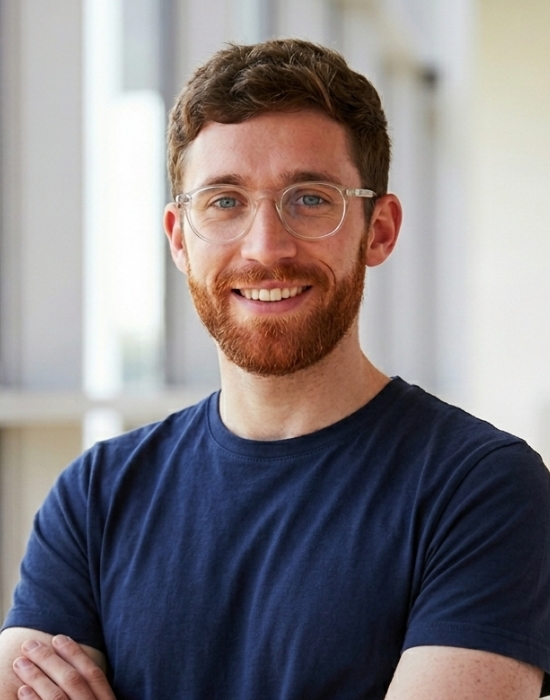
Patrick Galey is the Head of Fossil Fuel Investigations at Global Witness. A former financial journalist who graduated during the 2008 crisis, Patrick spent nine years as a general reporter in Beirut before transitioning to the climate beat.
At Global Witness, he leads data-driven investigations that expose the “soft power” of the world’s largest oil and gas companies: the “Super Majors”. His work focuses on unmasking the specific mechanisms of policy influence, from greenwashing to the direct lobbying that keeps fossil fuel subsidies in place despite the urgent goals of the Paris Agreement.
