Tangelic Talks – Season 03 | Episode 15
Climate Anxiety, Justice & the Power of Storytelling: Inside a Global Crisis w/ Svetlana Onye
15 minutes to read
Climate change is no longer a distant scientific concept — it is a lived experience that shapes livelihoods, mental health, identity, and justice across the world. But while the climate conversation is often filled with data, policies, and high-level negotiations, the real stories — the human stories — are frequently overlooked.
In this episode of Tangelic Talks, hosts Victoria Cornelio and Andres Tamez sit down with Svetlana Onye, a Nigerian climate writer, researcher, and activist redefining how we understand climate justice and eco-anxiety. As the head of Eco-Anxiety Africa, a project uplifting the mental health dimensions of climate change, Svetlana’s work bridges climate policy, gender equity, mental health, and community resilience.
She also serves on the UK Youth Climate Coalition’s Board and COP Working Group, influencing how youth perspectives and global south narratives enter global climate debates. This conversation dives into climate grief, the emotional toll of climate impacts, the politics behind climate vulnerability, and why storytelling is one of the most powerful climate solutions we have.
Svetlana’s Journey: From Human Rights to Climate Justice
Svetlana’s climate journey began early, shaped by both academic training and generational stories. As a Nigerian, she grew up hearing about Ken Saro-Wiwa, the renowned environmental activist who fought against oil extraction and paid with his life.
“That made me understand climate change isn’t just environmental — it’s political, social, and deeply personal,” she reflects.
She later studied journalism and politics of conflict, rights, and justice, grounding her climate approach in intersectionality. Whether she was reporting on Heathrow’s runway expansion, speaking with communities in Nigeria, or researching conflict-climate linkages, one insight became clear:
Climate change touches everything — health, inequality, gender, migration, and mental wellbeing.
Why Storytelling Is a Climate Solution
Climate change communication is often dominated by science, policy, or economic arguments. But this alienates people who don’t see their lived experiences reflected in the narrative.
Svetlana believes that storytelling brings humanity back into climate conversations.
It helps people understand:
- How climate impacts real lives
- How Western consumption affects the global South
- That environmental crises are rooted in systems of exploitation
- That nature and people are deeply interconnected
“People care when they see themselves in the story,” she says. “Stories help us make climate justice personal.”
This is why her writing focuses heavily on loss, resilience, community solutions, and the often-ignored emotional toll of climate events.
Understanding Climate Justice: More Than an Environmental Issue
Climate justice is a term many people hear but rarely unpack with depth.
For Svetlana, climate justice means:
- A world without exploitation
- Systems that value care over extraction
- Policies that protect the vulnerable
- Recognition that climate change impacts people differently
Women, girls, Indigenous communities, farmers, and low-income groups are disproportionately affected because the inequalities existed long before climate change intensified them.
“Climate justice is about dignity, health, joy, and the right to live without fear,” Svetlana says.
Eco-Anxiety: A Global Crisis with Two Realities
Svetlana differentiates eco-anxiety in the Global North and the Global South.
Eco-Anxiety in the Global North
- Driven by fear of the future
- Fueled by constant exposure to alarming news
- Deepened by lack of government action
- Often experienced as chronic worry or helplessness
Eco-Anxiety in the Global South
- Rooted in lived experiences of floods, droughts, water scarcity, and heatwaves
- Often manifests as PTSD, grief, anger, or hopelessness
- Worsened by weak infrastructure and limited support systems
- Sometimes leads to suicidal thoughts or severe distress
In short:
In the North, climate anxiety is anticipatory. In the South, it is reality.
But both require mental health support, tailored solutions, and policies that treat climate recovery and emotional recovery as intertwined priorities.
Why Climate Change Must Include Mental Health
The mental health impacts of climate change are often invisible but widespread. Svetlana argues that climate mental health should be a formal part of climate policy, especially in vulnerable regions.
Examples include:
- Support systems for communities after floods
- Trauma-informed disaster recovery programs
- Climate-resilient livelihoods to reduce fear and instability
- Youth support programs, since young people face the brunt of climate despair
“Recovery isn’t just rebuilding roads — it’s rebuilding people,” she emphasizes.
Adaptation, Solutions, and the Role of Local Knowledge
Communities are already adapting to climate impacts, often creatively and resourcefully.
Svetlana shares examples from her research in Zambia and East Africa:
- Farmers using SMS alerts to anticipate droughts
- Switching to climate-resilient crops
- Governments building additional dams
- Communities adopting traditional water rituals and practices
- Local women leading unorthodox adaptation methods (a theme echoed across her work)
Adaptation is happening everywhere — but global systems rarely highlight local innovations.
“Women especially carry the burden of climate impacts,” Svetlana explains.
“They walk long distances for water, face gender-based violence during resource scarcity, and hold families together under increasing pressure.”
This is why climate justice must be gender-responsive.
Why Women and Girls Face the Highest Climate Risks
A recurring theme in the episode is the unique vulnerability — and resilience — of women and girls in the global South.
Reasons include:
- Women are responsible for water, food, and caregiving
- Girls are more likely to drop out of school during climate crises
- Women face higher risks of violence during resource scarcity
- Men often migrate to cities for work, leaving women behind to cope
- Cultural gender roles increase exposure to harm
But women are also leading climate adaptation in ways the world rarely sees.
Svetlana argues that global media must spotlight women’s stories without framing them as helpless victims, but rather as innovators and leaders.
Why Climate Journalism Must Change
Traditional climate reporting focuses on numbers, disasters, heatwaves, or policy debates. But Svetlana believes journalism must become:
- Human-centered
- Solution-driven
- Emotionally supportive
- Intersectional
- Inclusive of global South perspectives
Imagine a report on wildfires in California paired with a story on the mental health impacts on displaced families.
That’s the shift she advocates for — a journalism that empowers, not overwhelms.
Youth Voices in Climate Spaces: Progress and Barriers
Svetlana observes that youth voices are increasingly recognized — but not yet integrated meaningfully.
Youth are invited to climate conversations… but not always listened to.
They propose solutions… but are rarely in decision-making rooms.
Still, progress is happening:
- The UK and Brazil recently signed an NDC Youth Deal
- Governments are starting to ask youth groups for guidance
- Youth organizations like UKYCC are influencing COP processes
“It’s an uphill battle,” she says. “But it’s getting better.”
Diaspora Climate Anxiety: Living in Two Worlds
One of the most powerful parts of the episode is Svetlana’s reflection on “diasporic climate guilt.”
As a Nigerian living in the UK, she experiences climate change in two conflicting realities:
- In the UK: mild weather, safe infrastructure, little urgency
- In Nigeria: floods, heatwaves, water scarcity, illness, and systemic vulnerability
This dual identity shapes her activism and storytelling.
“You belong to two places,” she explains. “You carry two forms of grief.”
And that grief can be a bridge — a way to amplify global south voices in global north spaces.
Climate Change Makes Inequality Worse
Climate change is often described as a “risk multiplier” because it amplifies existing vulnerabilities.
Svetlana highlights examples:
- Electricity poverty worsens when hydropower fails
- Farmers lose income when droughts destroy crops
- Women face violence when they walk farther for water
- Low-income households cannot rebuild after disasters
- Communities without strong governments face deeper hopelessness
If basic rights — water, education, health, safety — were secure, climate impacts would be less devastating.
Ancient Knowledge as Climate Adaptation
Many cultures had climate wisdom long before Western climate science existed:
- Water rituals
- Community-led crisis management
- Agricultural knowledge passed through generations
- Indigenous conservation systems
But colonization and modern systems often discredited these traditions.
Svetlana argues that reviving cultural knowledge is part of climate justice.
“Sometimes the solution already existed — we just forgot it.”
How to Cope with Eco-Anxiety: Svetlana’s Advice
Her biggest recommendations:
1. Don’t face it alone
Talk to friends, communities, support groups.
2. Focus on action, not perfection
Local change is powerful.
3. Embrace community resilience
Collective action reduces helplessness.
4. Allow yourself hope
Hope is not naive — it’s necessary for survival.
5. Take breaks
Read fiction, explore creative worlds, disconnect from news cycles.
Final Thoughts: Climate Justice Begins with Stories
This episode is a reminder that the climate crisis is fundamentally about people — their fears, their resilience, their identities, and their mental health.
Svetlana’s work shows that:
- Climate reporting must center humanity
- Eco-anxiety is real and culturally shaped
- Women and girls must be prioritized
- Youth voices are crucial
- Communities are key to adaptation
- Storytelling is a catalyst for justice
Climate justice is not just about reducing emissions.
It’s about ensuring dignity, joy, safety, and hope — for everyone.

Thought Provoking Q&A Session with Svetlana Onye
I don’t think I’ve always made that distinction very clearly. But in the recent essay I’m writing on the altar, I tried to bring it out more directly. I talk about how, in many Sub-Saharan African traditional religions, women are often venerated as goddesses and deeply intertwined with nature.
So when nature is harmed, women seem to be harmed first. And I think that’s an important distinction — we often speak about nature in feminine terms, and then when the environment is damaged, women are blamed or disproportionately affected, as if they caused it.
That’s something I want to explore more in my work. I want to bring in a stronger feminist angle because the more I write, the more I’m drawn to work that highlights those voices. I think I’ve only started making that distinction clearly after being in conversation with others and through the recent research I’ve done.
I think when we look at the research, the mental health impacts come from many angles, but the biggest one is this: when you don’t have a government you can rely on to protect you after a climate event, you become much more aware of your own helplessness.
If there’s a flood, for example, you’re not instinctively thinking the government will fix the roads in two weeks, repair the infrastructure, or provide enough financial support to help people recover while they can’t work or access healthcare.
So when people — especially in places like Nigeria — talk about their fears, a lot of it comes from lived experience. I don’t want to simply call it corruption, but rather a lack of trust, especially among young people, that the government will respond effectively when crises happen.
If that infrastructure and policy framework existed, people would feel safer in moments of instability.
And on the other hand, sometimes government and policy decisions can actually add to the anxiety — especially when authorities come down heavy-handed and start making decisions for farmers or people whose livelihoods depend on the land.
I was speaking to a young person from Northern Nigeria, where they’re experiencing extreme drought, and he said it affects farmers deeply — yet they’re not brought into decision-making. Policies and adaptation tools are introduced to them rather than with them. They’re not in the room to say, “This is what we actually need,” or, “This is what fits our context.”
Often, policymakers expect people to speak a certain way or have a specific type of technical knowledge, which reinforces the idea that decisions should be made for them. But lived experience is a skill and a form of expertise — especially for farmers who have worked the same land for generations and have seen its changes firsthand.
If governments truly respected that knowledge, they would bring these communities into the decision-making process. But they don’t — and the result is policies that don’t help the people they’re supposed to help.
I think when it comes to mental health and climate change, the research is growing a lot. It’s not as extensive as some other fields, but it has expanded significantly over the last five years. And honestly, there’s already enough to prove that the issue exists. There’s enough data to show that people do need mental health support.
But mental health research is often qualitative — it’s about feelings, experiences, and wellbeing. Because of that, it’s sometimes not taken as seriously as data that can be “proven” through different scientific methods. For me, it doesn’t feel like we need ten more years of research to validate what people are already experiencing. It feels like decision-makers need to recognise that this is just as important as the other things they prioritise. And I’m still not sure what exactly will make them understand that.
Maybe they need to see the monetary benefits of investing in people’s mental health — but I don’t think that should be the reason we care. It’s worrying when the argument becomes: “We should care because if people are depressed, they can’t work.” That shouldn’t be the benchmark for whether someone deserves support.
People’s mental health should not be tied to the economic productivity of a country. Good mental health and wellbeing should be a right, regardless of whether someone is employed or contributing to GDP. And in the context of climate change, mental health recovery is incredibly important. Without support, people may turn to addiction, or feel so overwhelmed — unable to feed their families or manage their crops — that they question whether they want to continue living.
For me, that is more than enough reason to care. We should support people simply because they are people, not because of how much money they produce for a country.
Many people talk about the climate crisis as a crisis multiplier or a risk multiplier, rather than something that creates problems entirely on its own. And I do think that’s true. Climate change exacerbates poverty. If you’re already unsure about your income, climate impacts make that insecurity much worse.
For example, when I was speaking to a girl in Zambia, she explained that so much of the country’s electricity comes from hydropower. When water levels drop, the power goes out. If you’re working in a salon and that’s your main source of income, you simply can’t do your job without electricity. So if you’re already earning very little, losing that income pushes you even deeper into low-income living.
Electricity poverty, which already exists, is made worse by climate change. Food insecurity, which is already a challenge in many African countries, is made worse by climate change. On a foundational level, there is already so much inequality — and then climate change comes on top of that without the right policies to help people adapt or feel like they can survive and thrive in a changing environment. It just makes everything worse.
If we had a basic level of rights secured for everyone — access to water, education, and healthy development — then when climate change impacts hit, people wouldn’t be left with absolutely nothing. They would at least have a foundation to stand on, even if they can’t progress further until recovery happens.
But for many countries in the Global South, that foundation doesn’t exist. That’s where the intersectionality really shows
I think that’s such a good question, because as a diaspora person you’re in this liminal space — you belong to two countries, but in each place you have a completely different experience. When I'm in Nigeria, I'm so aware of my privilege. But then in the UK, to certain groups, I’m not seen as British.
Even when we talk about climate anxiety, a lot of conversations in the UK are focused on things like, “I’m scared of the rain,” but I know that in Nigeria when it rains, it’s nothing like here. Everything stops. Elders get sick in ways they wouldn’t if they had proper healthcare. So I sometimes feel this guilt — even though I work in Africa, I’m doing that work from here, and I don’t fully understand what people are going through or the exact context they’re living in.
That’s when I realised I don’t always deserve to have the voice. My role is often to amplify voices — to pass on knowledge to people who have the lived experience but maybe need more tools or access to take up space in global conversations.
And then, when I’m here — for example, working at The Guardian or Carbon Brief — I ask myself: How can I bring those stories into UK spaces where people don’t think about these impacts in the same way? That’s where privilege becomes a blessing. When you’re aware of it, you can use it to be a bridge — bringing those stories forward and showing that these experiences are just as important as the everyday lives of people here.
As a diaspora person, you feel that so clearly — the responsibility of bridging worlds.
The term eco-anxiety is a Western term. But before colonisation — and unfortunately, so much of that knowledge has been lost — there were different ways of describing those same feelings.
Especially in Nigerian, Igbo traditions, community was central. You had community gatherings, which still happen today, where people come together to discuss the issues affecting them. There was an understanding that it takes all of us to find the solution we need.
So when these climate and mental-health concepts are framed in Western terms, it becomes harder to create solutions that speak directly to our contexts back home. From what I’ve been researching, many of these solutions already existed. There were longstanding adaptation methods, ways of living with nature, ways of understanding ourselves in relation to the environment. We could draw from that — and build on it — to make sense of climate impacts today.
But if we keep telling ourselves, even unconsciously, that the “best” knowledge systems come from the West, then we fail to recognise the richness of what already exists — and in some cases, what’s richer than the imported frameworks.
For example, when I was being taught in the UK about value systems for water, I remember thinking: this is not new. Many cultures across the Global South have long-standing traditions of honouring water — understanding it as a living entity, not just a resource. These philosophies already offer so much.
So it’s not about inventing something new. It’s about reminding ourselves that throughout history, we were taught to believe certain people “know less,” and in doing so we’ve diminished knowledge that is deep, rich, and completely relevant today.
I'm not a climate scientist, so I can't say this in the most technical way, but the main issue is that weather patterns are changing — and the changes are severe.
In the past, for example, it might have rained in February for a predictable amount of time with a predictable intensity. Now, it might rain for two or three months straight, and the rainfall is much heavier because of increased condensation and pollution in the air.
The same applies to droughts. There have always been seasons with less rain or higher temperatures, but now those periods are getting even hotter and lasting far longer. The seasons don’t shift when they’re supposed to.
A farmer explained it perfectly:
“When it rains, it rains at the wrong time. When the plants need water, they don’t get it — and when they finally do get rain, it’s too much for them to handle. And when it’s dry, it’s dry at the wrong time, so the crops can’t grow when they usually would.”
So the seasons still exist, but they’ve become more extreme, more unpredictable, and more destructive — and that’s the core challenge.
Svetlana Onye
Climate Journalist and Writer
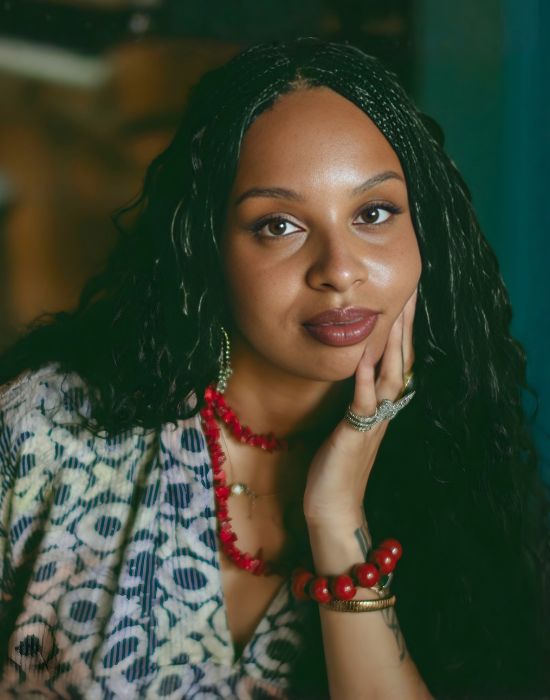
Her journalism focuses on the human stories behind the climate crisis, from loss and adaptation to resilience, identity, and justice, with work published in The Guardian, Carbon Brief, Shado Mag, and more. She uses storytelling to challenge narratives that marginalise Global South perspectives and to highlight community-driven responses to climate impacts.
Svetlana contributed to the first African Youth Position Paper on Climate Change and Health and serves as a Director and COP Working Group Member of the UK Youth Climate Coalition. She has represented youth voices at UN climate negotiations, including COP29. A TuWezeshe Fellow, she holds an MSc in the Politics of Conflict, Rights and Justice.
