
Tangelic Talks – Season 04 | Episode 07
The Low Carbon Economy Is Already Here — We Just Need to Deploy It In Side From Josh Dorfman
15 minutes to read
In this episode of Tangelic Talks, co-hosts Victoria Cornelio and Andres Tamez sit down with Josh Dorfman, a climate entrepreneur who believes we already have every tool necessary to solve the crisis,we only need to start using them.
In this conversation, Josh explains why he’s moved past the “crisis” narrative to focus on the “Age of Adoption.” We discuss his journey from “The Lazy Environmentalist” to building carbon-negative homes with Plantd, and why the secret to scaling green tech isn’t talking about the environment at all, it’s about offering a better product. If you’re ready to trade climate anxiety for a solutions-oriented roadmap, tune in to hear how market momentum is finally turning the tide.
From China to Climate: How an Unlikely Journey Shaped a Career
Josh’s entry into sustainability was anything but deliberate. In 1995, fresh out of university, he moved to China to teach English — and ended up working in a bicycle lock factory, surrounded by a billion people who were already riding bikes but rapidly building highways to replace them.
“I don’t know anything about climate change, but what does it mean when there’s a billion people more people driving cars?”
That question never left him. After returning to the US and completing his MBA at Thunderbird — a legendarily international business school on an Air Force base outside Phoenix — Josh spent several years unable to shake the conviction that a sustainability-driven consumer culture was coming, whether the market was ready or not.
In 2004, he started Vivavi, a modern sustainable furniture company — one of the first to combine contemporary design with environmental responsibility. He lived in his own showroom for four years bootstrapping it. It was messy, but it was real. And it planted the seed for everything that followed.
The Lazy Environmentalist: Owning the Contradiction
The most honest moment of Josh’s career came not from a boardroom — but from a van on the New Jersey Turnpike at midnight.
His one employee, Lucy, had spent months watching Josh preach sustainability while ignoring his own recycling, taking long showers, and nearly tossing his bed in the trash. On their last night working together, she finally asked:
“Are you really an environmentalist?”
Instead of deflecting, Josh wrote a blog about himself on their little furniture company’s website. He called it the Lazy Environmentalist. He admitted he took long showers, wanted a convertible, and wouldn’t change his habits unless the sustainable option was also the convenient, beautiful, or affordable one. And he suspected millions of Americans felt exactly the same.
That blog became a SiriusXM radio show and then a reality TV show. The insight that launched it: if we want people to act sustainably, we have to meet them where they are — not where we wish they were.
The Business Case for Climate Action Is Already the Quality of Life Case
One of the most compelling arguments Josh makes in this episode is that pursuing a higher quality of life and pursuing climate solutions are increasingly — and structurally — the same pursuit.
He describes a conversation with the former mayor of Barranquilla, Colombia, who planted trees across the city. Skeptics said it was too expensive. The mayor’s response? In London, streets with intentional tree cover see property values rise by 10% — and so does tax revenue. The investment paid for itself. The trees also kept children from passing out on their way to school.
“Anything you do to raise the quality of life for your citizens — fix public transit, add bike lanes, create pedestrian spaces — that’s also going to cut carbon footprints. The linkage goes both ways.”
He points to induction range cooking, now preferred by many top chefs over gas flames. The barrier? Rewiring your kitchen. The solution? A startup called Copper built a battery into the range itself so it charges during the day and powers three or four cooking sessions — no rewiring, same outlet as your toaster. Modern upgrade. Better cooking. Lower emissions.
Planted: Building Materials That Pull Carbon From the Sky
Josh recently returned to Planted as fractional CMO, the carbon-negative building materials company he co-founded. Planted manufactures structural panels from a fast-growing grass — not bamboo — that pulls carbon from the atmosphere 10 times faster than trees because it grows 10 times faster.
The manufacturing process is equally radical. Working with former SpaceX engineers, they shrunk an industrial mill with massive smokestacks down to a 140-foot unit that fits in any warehouse and runs on standard power. At the other end of the machine? Building panels with the same density, weight, and installation process as conventional plywood.
Their biggest client: D.R. Horton, the largest home builder in America — who placed a $100 million order last year.
“The more you build with our materials, the more carbon you’re pulling from the atmosphere and locking away in your walls. Carbon’s just in the wrong place — we need to put it in the right place.”
No new training for installers. No different nails or taping. A drop-in replacement that happens to be stronger, more moisture-resistant, and carbon-negative.
Why Climate Solutions Don’t Stick (And How to Fix It)
Josh is direct about the friction holding climate innovations back. After years of working with founders and watching companies struggle to scale, he sees two recurring patterns.
The mission-first mistake. Passionate sustainability founders often lead with environmental impact — but buyers don’t make purchasing decisions based on that. They care about price, quality, and ease of adoption. Selling the mission before solving the customer’s pain creates immediate dissonance.
The product-as-company trap. Too many founders describe their company as if it is the product. Josh uses solar as the example: if you lead with kilowatts and inverter specs, you’ve already lost most homeowners. The CEO of Sunrun, Mary Powell, cracked this by showing up in Home Depot and talking about energy cost hedging, power outage resilience, property value, and family security — the things homeowners actually care about.
With Planted, they knew that if builders were going to adopt a new material, it had to install exactly the same way as what they already used. No new techniques. Same weight. Same density. A drop-in replacement.
“Any type of change is hard. Even if you’re excited about the mission, getting permission from your boss is still friction.”
We Already Have the Tools. The Problem Is the Story We Tell.
One of the sharpest critiques in this episode isn’t aimed at polluters — it’s aimed at climate media.
Josh argues the climate conversation suffers from two overlapping failures. Mainstream media fixates on problems and disasters. Climate media fixates on future promises — massive funding rounds, lab-stage technologies, corporate net-zero pledges with no plan attached.
“This corporation just announced by 2050 they’re gonna be climate net gazillion. And people are like, hooray. And it’s like, where’s the plan? What’d you do yesterday?”
His platform Supercool (at getsupercool) was built around a simple filter: is it real, is it deployed, and does the data back it up? No lab-stage promises. No fundraising announcements. No seaweed that “could” do amazing things one day. If it’s commercially operational and the carbon numbers hold up — then it gets a platform.
Research from Reuters and UN communications teams consistently shows the same thing: audiences have tuned out of doom-and-gloom climate coverage. What actually moves people is solutions. Evidence. Things that exist in the world today.
“The future we really want is actually being built today. It’s not evenly distributed — but the pieces are out there.”
The 3.5% Rule: You Don’t Need Everyone to Change Everything
For those wrestling with their own climate hypocrisies — flying to give sustainability talks, buying imperfect products, not recycling perfectly — Josh offers a framework grounded in movement research.
Studies on successful mass political movements show that a tipping point is reached when roughly 3.5–5% of a population is actively engaged. At that threshold, everyone knows someone who’s involved. The movement becomes personal. Change follows.
“You don’t need everybody. You need some amount of critical mass who really cares to keep caring — and we’re going to get there.”
The implication: stop paralysing yourself with personal carbon math. If getting on a plane gets you in front of the right person, who reaches the right organization, which scales a real solution — that chain of influence may matter far more than the seat you occupied on the flight.
Networks matter. Stories travel. The right narrative in the right room spreads faster than any policy memo.
Key Takeaways from This Episode
🌱 The low carbon economy isn’t coming — it’s here. Over $2 trillion was invested globally in clean energy in both 2024 and 2025. Solar is now cheaper than every fossil fuel. EV battery prices have crossed the parity threshold.
🏗️ Planted is proof. Carbon-negative building materials at commercial scale, adopted by the largest US homebuilder, manufactured from grass in a former tobacco factory in North Carolina.
🎯 Sell the outcome, not the mission. Climate founders who lead with environmental impact before customer value slow their own adoption. Meet buyers where their pain is.
📡 Cover what’s real. The media’s obsession with future promises and funding rounds is actively tuning audiences out. Solutions journalism — deployed, data-backed, commercially viable — is what actually changes minds.
🔗 You only need 3.5%. Real change doesn’t require everyone. It requires enough people who care deeply enough to stay in the work — and the networks that carry those stories outward.
Final Thoughts
Josh Dorfman’s journey — from a bicycle lock factory in 1990s China to carbon-negative building panels inside a former tobacco factory in North Carolina — is a masterclass in staying in your lane while refusing to stay still. He has built furniture companies, run startup ecosystems, hosted TV shows, and co-founded climate tech startups. But the thread running through all of it has never changed: the biggest challenge of the 21st century is the one worth showing up for.
What makes this conversation stand out in the Tangelic Talks Season 4 series is Josh’s refusal to separate optimism from pragmatism. He doesn’t deny the suburban sprawl, the slow policy timelines, or the media’s obsession with announcements over action. He sees all of it. He just chooses — consciously and deliberately — to put his attention on what is real, deployed, and scalable right now.
That’s not naivety. That’s strategy.
The low carbon economy isn’t a future vision any more. It’s a $2 trillion-per-year present reality, quietly being built in warehouses, on rooftops, in home walls, and along city streets. The question Josh leaves us with isn’t can we get there — it’s where are you going to put your focus?
“There is so much more good stuff happening than many of us realize. The future we really want is actually being built today.”

Thought Provoking Q&A Session w/ Josh Dorfman
We've had 20 years of 'Invention.' We were waiting for the tech to get better and cheaper. Well, it's here. The tech is here, it's cheaper, it's better, and it's ready. So we're moving from a period of invention to a period of adoption. The challenge now isn't 'Can we do it?' but 'How fast can we deploy it?' We need to stop acting like the solution is a miracle away.
Almost everybody’s tuned out of the climate conversation... because we’re always covering the wrong things. We talk about abstract targets or the latest crisis. If you look at the data—even the UN communications department agrees, people tune in when you talk about solutions. If you don't talk about solutions, people are apathetic, tuned out, and depressed. I don't get why we don't do that more.
The mistake is leading with the 'climate' benefit. People want a better life, a better product, or to save money. At Plantd, we focus on building a material that builders actually want because it performs better. You win when the product is better and happens to be carbon-negative. Don't ask for sacrifice; offer an upgrade.
The academic literature really backs up what I'm saying: you have to talk about solutions to get people to tune in and care. I want to cover the things that actually I feel like are here, are deployed. We need to stop looking for the next 'miracle' technology and start scaling the ones that actually cut carbon today. It's about deployment now.
If the data is clear, talk about solutions or otherwise people are apathetic and tuned out and depressed I just don't get why we don't do that. Take the things that are already working and be loud about them. We have everything we need to win; we just need to decide to do it.
Josh Dorfman
Co-Founder and former CEO of Plantd
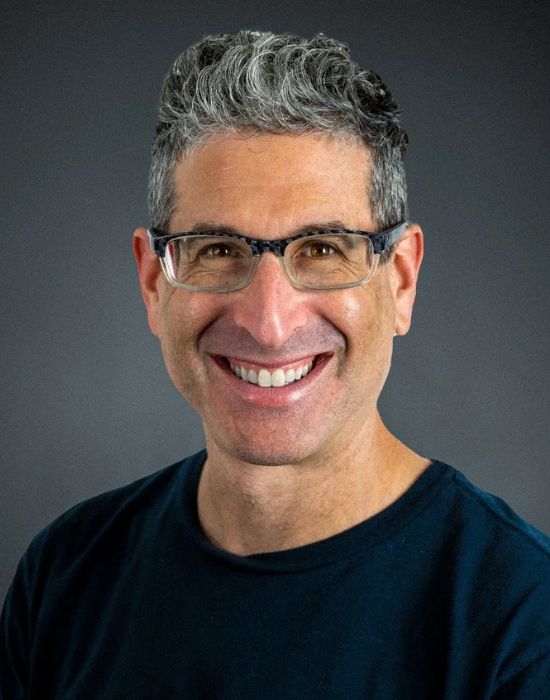
Josh Dorfman is a renowned climate entrepreneur, author, and media personality dedicated to scaling mission-driven ventures. He is the Co-Founder and former CEO of Plantd, a carbon-negative building materials company recognized by Fast Company as one of the Most Innovative Companies of 2024.
Widely known as “The Lazy Environmentalist,” Josh has spent his career making sustainability accessible and stylish through his award-winning Sundance Channel TV show, SiriusXM radio series, and best-selling books. Currently, he is the host of Supercool, a podcast and media platform that spotlights the founders and technologies driving the low-carbon economy. With an MBA from Thunderbird and decades of experience at the intersection of tech and consumer behavior, Josh is a leading voice in the “Age of Adoption,” advocating for market-driven solutions that improve lives while saving the planet.
